7.06.2010

SUMMER TRAVEL PART 1: BRUGES + ANTWERP

The day after our daughter's school ended for the summer we headed to Belgium. June is a great time to travel as it's a little cooler, with very few tourists. Unfortunately flight delays lost us the day I'd looked forward to in Brussels, going to the flea markets in the Marolles District, so we headed straight to Bruges when we arrived at 11:00 at night, instead of 8:00 in the morning as planned! It was an hour's drive from the Brussels airport, but we were wide awake, being on L.A. time. Luckily the car had GPS to help us find our way late at night through the narrow streets to the hotel...Martin's Orangerie. It's situated right on a canal, the essential feature in my search for a hotel in Bruges. This was the most traditional of the hotels we stayed in, and was a perfect place to rest after a very long trip. These are photos of our room. It's the romance of those chairs by the windows that made this hotel wonderful to me.


When we woke the next day the view to the canal was lovely, but the number of meandering day trippers was a little disconcerting. We discovered however, that by going just a few blocks away from the main square you could leave them all behind, and as the receptionist informed us, they all leave at 6:00 PM. The old town is almost perfectly medieval. It probably wouldn't have looked that different five hundred years ago, if the cars and the signage were gone.


We rented bikes, and explored the city in depth, riding on each street, and on a path around the edge of the old town, till we couldn't find any streets we hadn't seen...the late sunset about 10:00 PM made that possible.


One of my favorite spots...


Right next door is a quirky hotel I'd love to try...the Guesthouse Bonifacius.


We could just make out the wallpaper from the bridge, so I photographed the sign and found photos on their web site.


It didn't appear to be open, but judging from the web site it looks as though I would only have had to knock on the front door to see inside. The hidden location, and the character of the building is very appealing.

This photo is taken inside a convent where the quiet (requested on the signs) made for an even more unearthly atmosphere, kind of dream like.


The history of this place is really interesting; it's called a Beguinage, which dates to the 13th century. At that time there was a movement away from the formal church to a purer and more mystical religion. The church was threatened by this and followers of the many splinter groups were often persecuted. Female followers were tolerated by living in Beguinages, walled communities with central gardens in separate parts of the city, controlled and supervised by the church. The Beguines had more freedom than traditional nuns had. Though they did take vows of obedience and chastity, they generally did not take the vow of poverty, and their vows weren't binding. It may also be that the large numbers of single women due to all the men killed in battle was the larger reason for these communities to develop. This Beguinage became a Benedictine Convent in 1937.

This is the exterior of the convent's walled garden...when it was time for services everyone was asked to leave and the gates were closed.


Wildflowers growing from a rock wall...


Looking to the right along the canal a particularly beautiful street...


As the day lingered on we stopped for drinks by the water and watched the swans...


Swans are everywhere in Bruges


Late afternoon light on the houses...


Beautiful sky at the end of the day...


We had a delicious dinner at 11:00 PM at Bistro Christophe.


The next morning we left for Antwerp. We hoped to see the design and antique stores on Kloosterstraat, but sadly it was Monday, the day they all close! We looked through the windows to get a sense of what they offer and it was very tempting. This overgrown lot that has been turned into an installation is on Kloosterstraat.


Luckily we were staying at the Hotel Julien, which was so beautiful, and so embodied the contemporary Belgian design aesthetic that the stop in Antwerp was completely worth it! The entrance seemed formidable...a pair of solid doors, and you needed to ring a bell to enter.

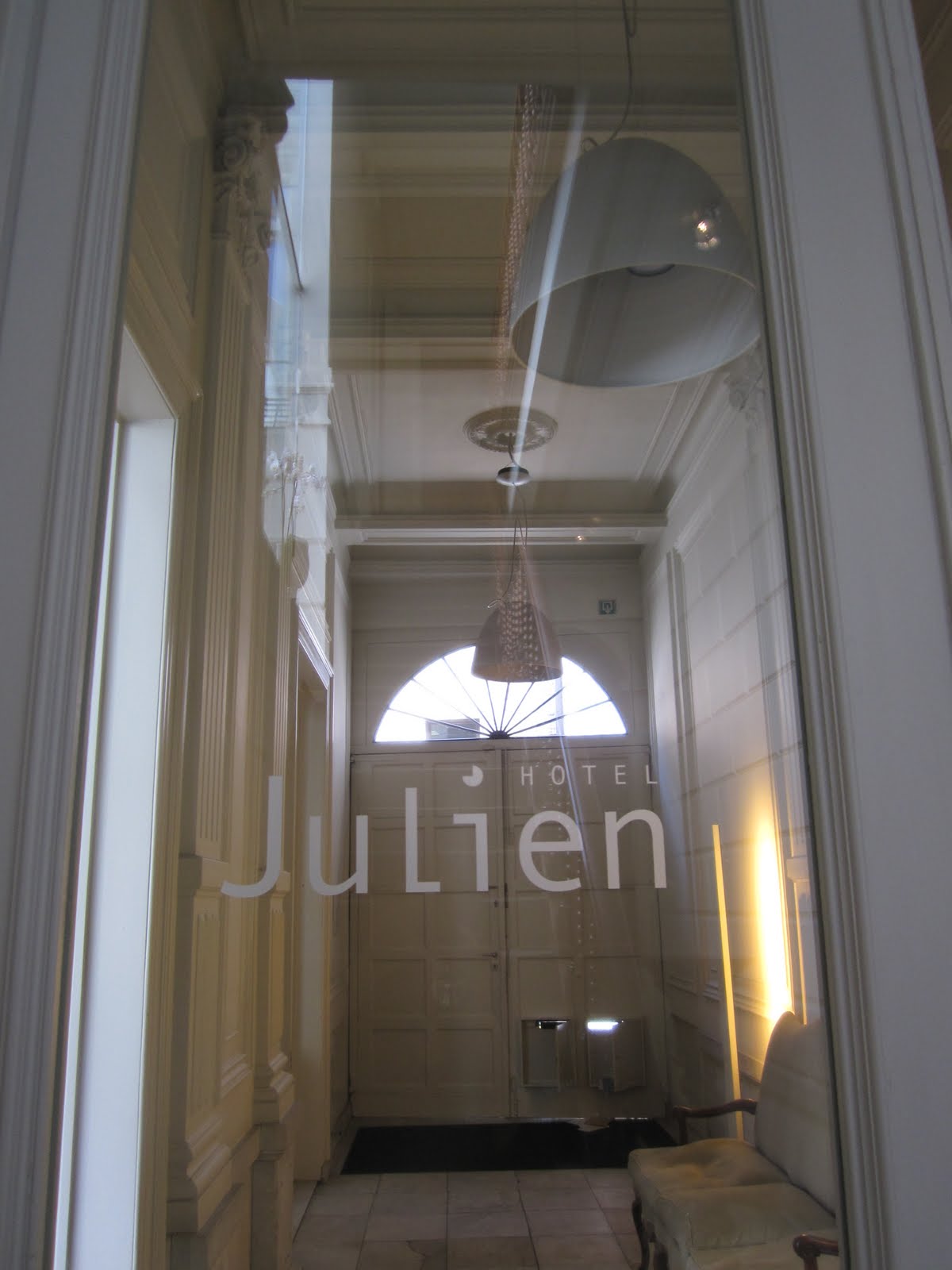
This is the courtyard between the Reception area and the Bar/Lounge. Our windows are the ones seen facing from the 2nd floor...

A view of the courtyard from the interior stairs...

Details of our room...


The Lounge on the other side of the courtyard...


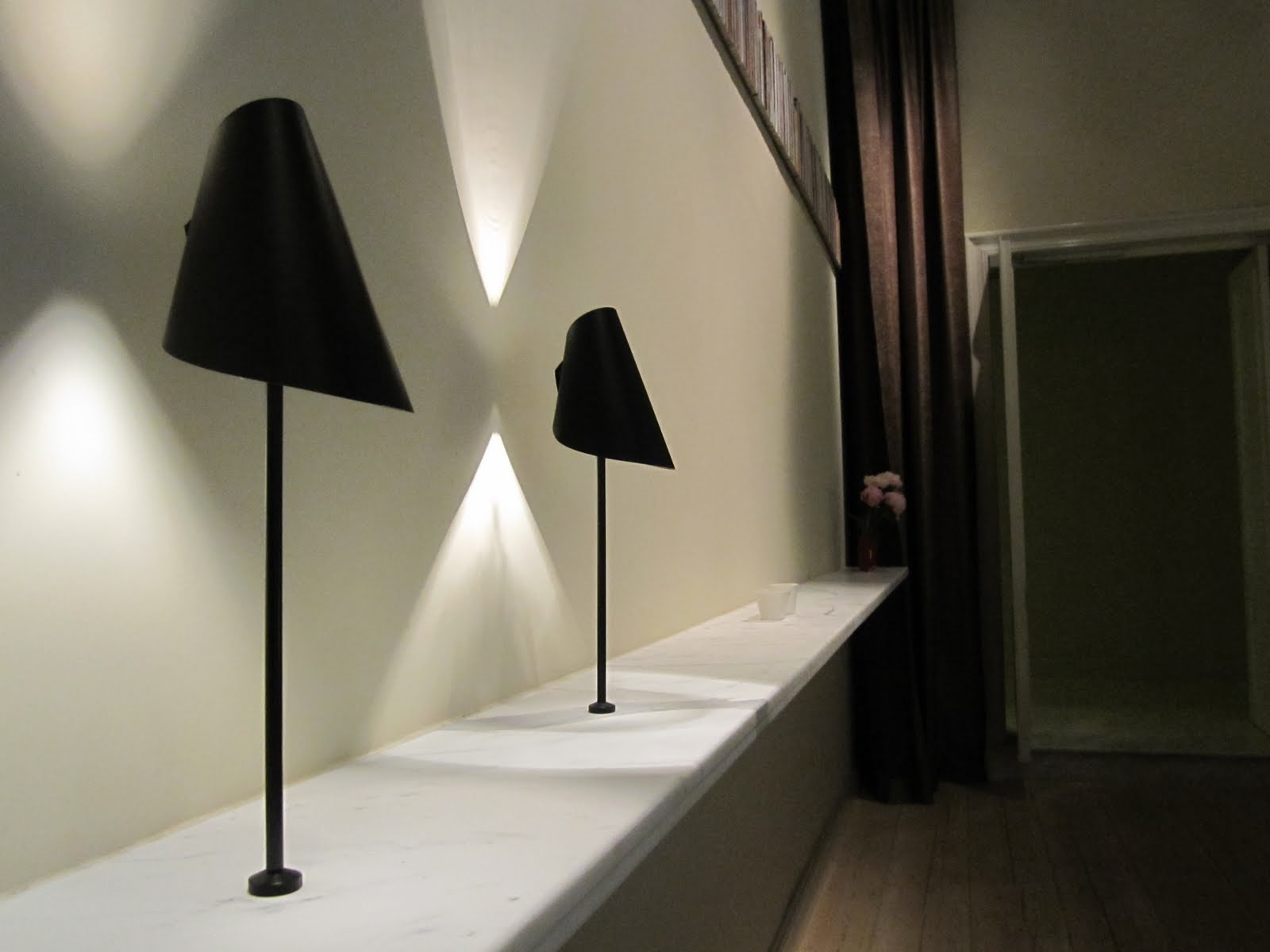
I like the asymmetrical installation of these lights in the Bar...


Beyond the Bar is the Breakfast Room


A second entrance becomes an interior passage to the Breakfast Room...

These stairs can be glimpsed through the doors above...I love the shadows the decorative iron work makes on the raw looking wood stair...

This skylight has a fantastic view...
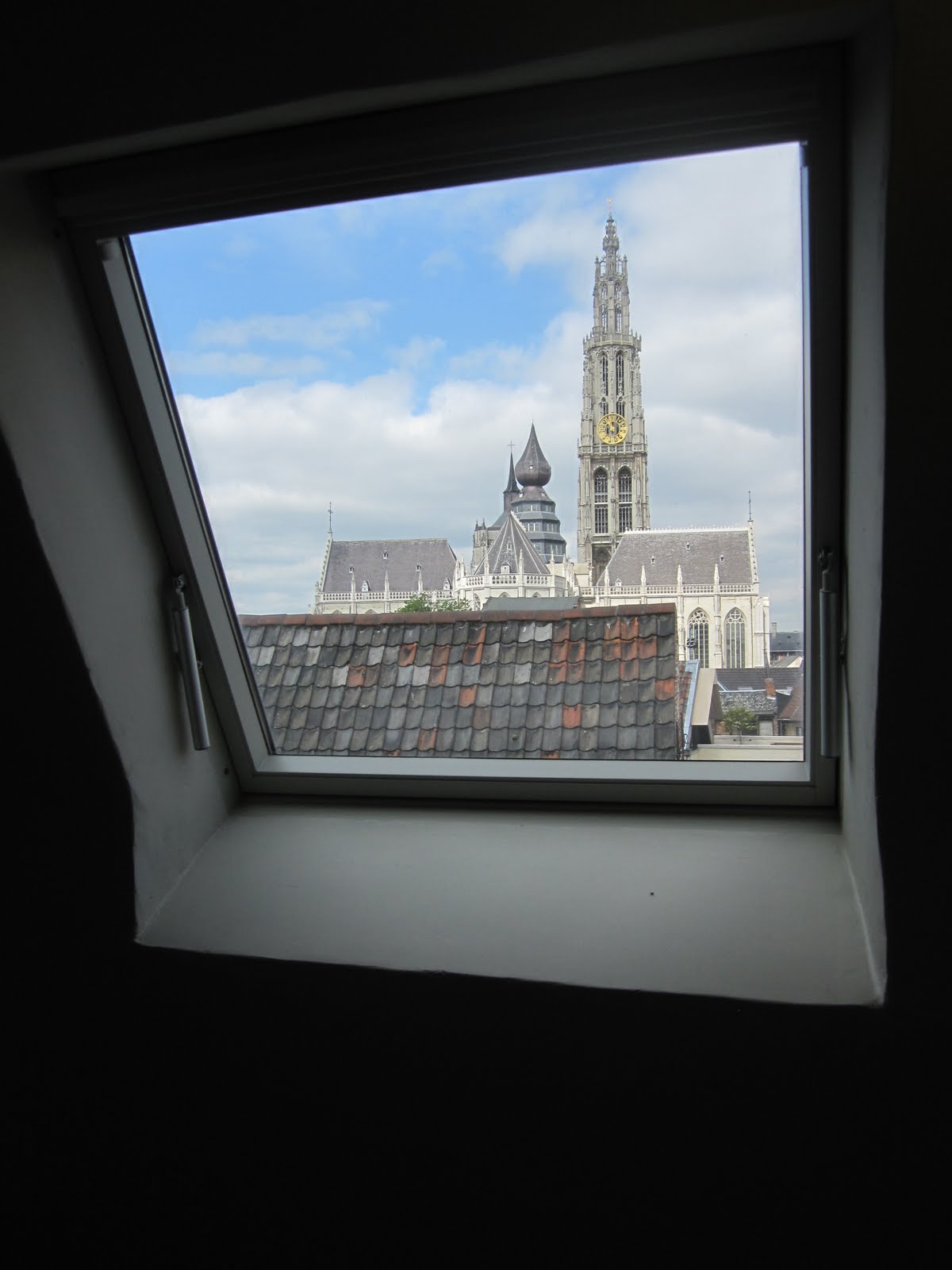

The view from the lounge on the roof...


The stairs to the roof are sublime. Perfectly simple, a cross between a Shaker and a Flemish aesthetic.


Next post will be about visiting the Netherlands...

6.07.2010

CHAIRS

This photo, (and the drawing in it), is by Saul Steinberg.


When I put a room together I like to include one odd chair...something with character that gives a room an individual quality, like inviting an interesting friend to visit. I search for chairs that have a sculptural silhouette, that look good from all angles.

I prefer to find chairs that aren't known too well, though some of the classics are hard to resist. The anthropomorphic chairs designed in the 40's and 50's such as Saarinen's Womb chair, Arne Jacobsen's Egg chair (funny how those names relate) and his Swan chair, Bertoia's Bird chair, and the Eames' Molded Plywood chairs are fantastic designs. Still, when I find other chairs that are unfamiliar it creates more of a unique room.

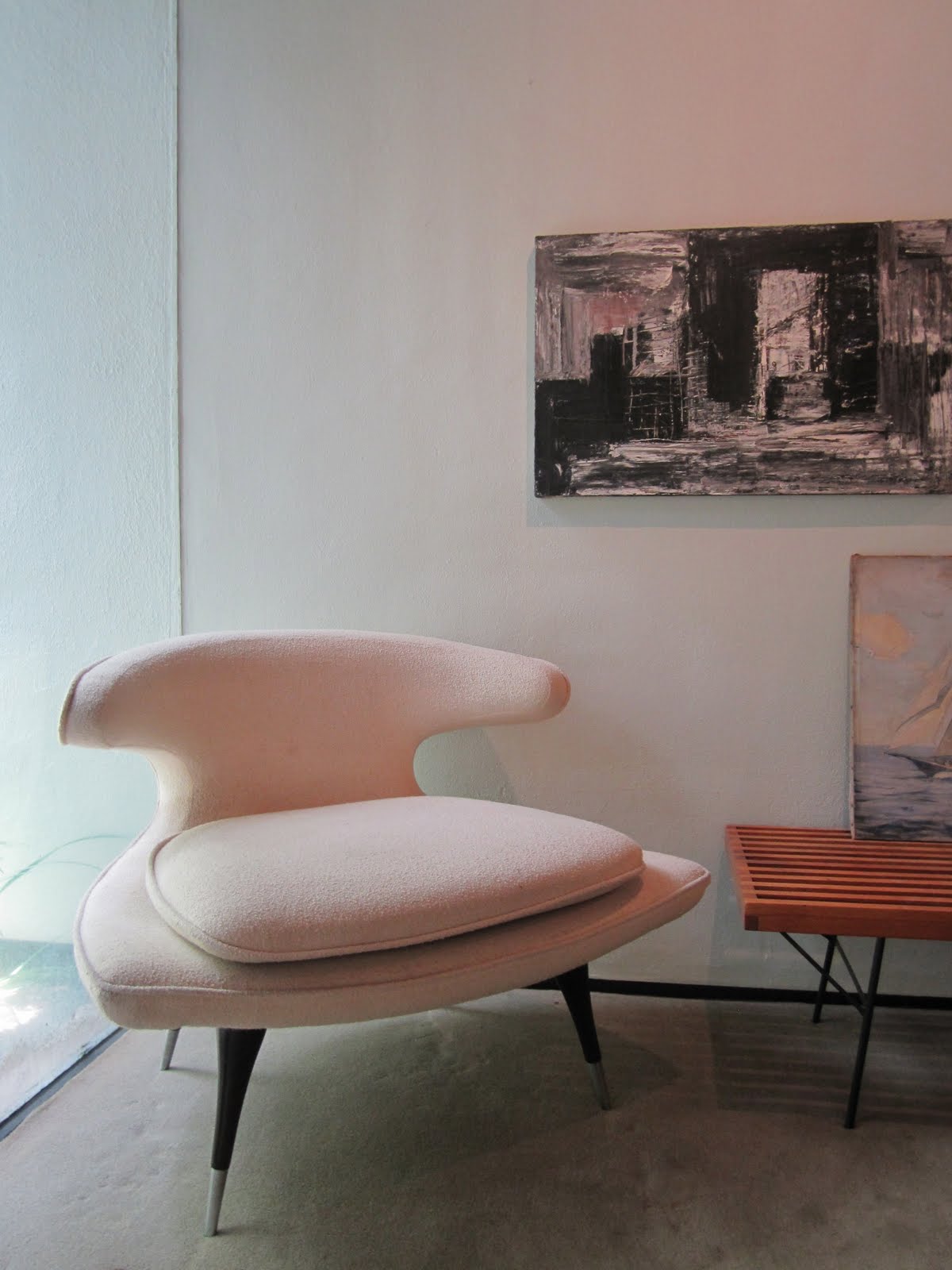
This 1950's Karpen chair is sitting in a corner of our Bedroom. A series of rounded back armchairs follow...they sit particularly well in corners of rooms, and in corners of seating groups as well, as they're easy to walk around.


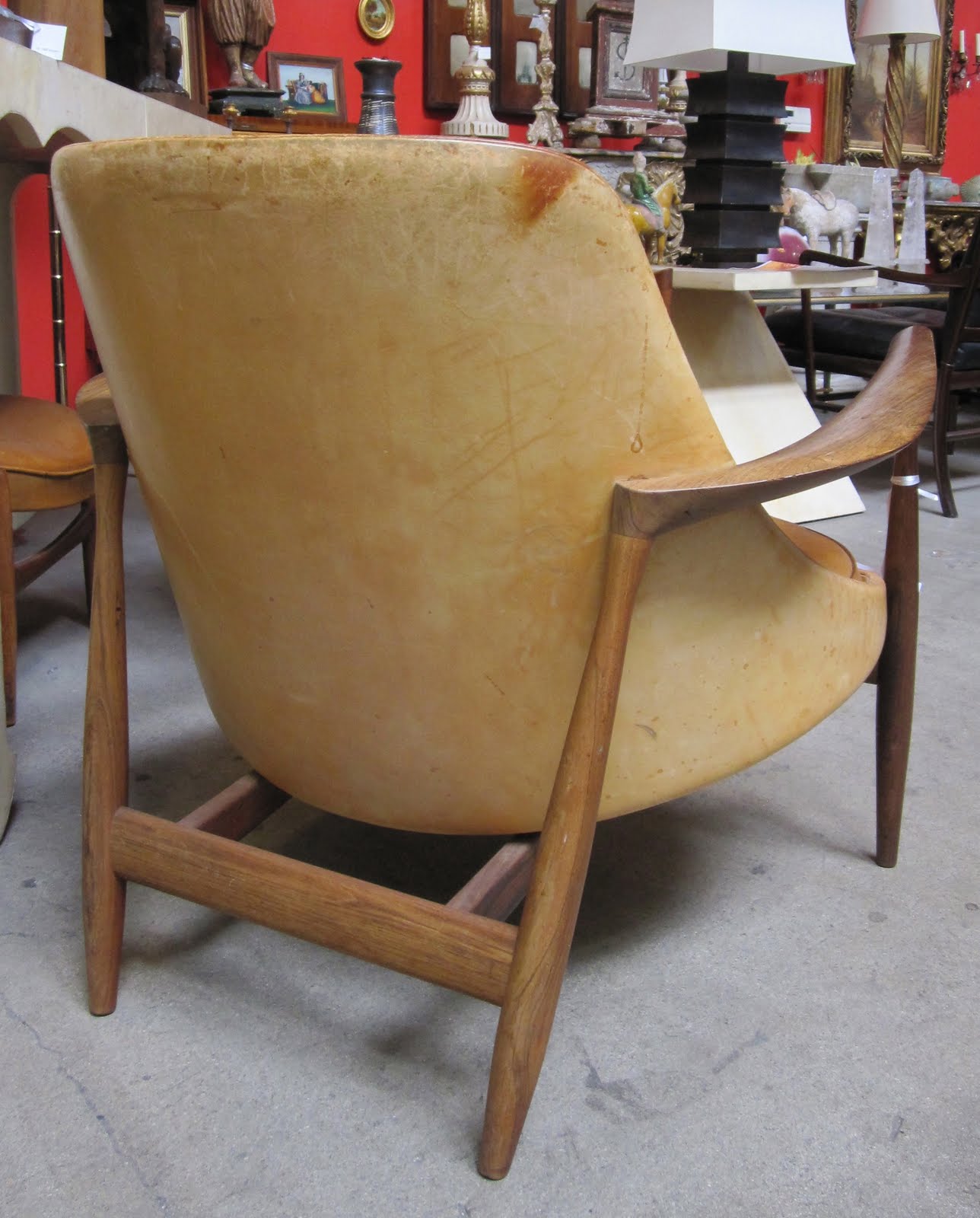
From Danish designer Ib Kofod-Larsen (1921-2003) this 1950's chair, the "Elizabeth Easy Chair" is photographed at J.F. Chen:


A Steinberg cat on an Eames chair:


I love the un-decorated back rail as well as the proportions of this French Louis XV style Bergere chair from the 1880's. I used it as the subject of the drawing for my business card.


A Rene Prou Fauteuil circa 1940. I like the way he's modernized the lines of Louis XV style wood frames, preserving some of the curves in a cleaner simpler design.


A set of Seagull Chairs by Arne Jacobsen from 1973 at Hallworth:


Seen in Marie Clair Maison, this simple lines of this French chair are enhanced by the use of a stripe on the back. The alternate fabric on the seat prevents the stripe from overwhelming the chair.


Matisse made this chair a character in the painting through his use of color.


A chair in Matisse's studio:


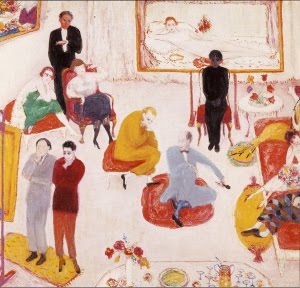
"Soiree", 1917-1919, by Florine Stettheimer (1871-1944)... a setting full of interesting chairs .


"Heat", 1919, by Florine Stettheimer...chairs in the garden giving respite during a heatwave in the days before air conditioning.


A photo of the artist, Florine Stettheimer:


Here's a group of square backed lounge chairs. This one is a 19th century Louis XVI style Bergere Chair.


In a room designed by Axel Vervoordt near Bruges:


Designed by Lou Hodges, 1970, at Reform Gallery:


Some high back chairs follow... photographed at J.F. Chen, this is the "Big Eva Chair" by Kersten Horlin Holmquist...so personable!


A view of the back:


A swivel lounge chair by Gerard Van Der Berg at Downtown, from 1965:


The Tulip Chair, by Pierre Paulin, 1965:


You can see the back of the Tulip chair in this photo of a Sitting Room I designed in Brentwood.


I've always liked Wing chairs...the height can give a vertical emphasis to a room, and they create a sense of privacy. This one is from the 1940's, redone, and being reproduced by Lawson-Fenning:


This Wing Chair is in the style of Dorothy Draper, from the 1940's.


I remember seeing this Wing Chair for the first time many years ago at Troy in New York. It's got an unforgettable silhouette...very animated. It was designed by the Danish Frits Henningsen (1889-1965)in the 1930's.


A Louis XV style Bergere Wing chair with a tufted back, made in the 1950's.

Another take on a Wing Chair...The Grand Papilio designed by Naoto Fukasawa in 2009, from B&B Italia:


From the New York Times, this is Derry Moore's Living Room. The pink Wing Chair looks well lived.


In the corner of our Studio, this 1950's armless chair is from Karpen, in Chicago.


Slipper chairs, (low chairs without arms) are good for perching on, as you can sit on them in any direction. This T.H. Robsjohn-Gibbings slipper chair is in a Master Bedroom I designed in Brentwood.


A detail from "Heat" by Florine Stettheimer, 1919:


A cross between a hammock and a lounge chair this terrific piece is new, made by Blackman Cruz:


This 1950's Franco Albini (1905-1977) chair sits in a corner of our Living Room.


A rattan armchair circa 1910...the decorative back is like a drawing:


A vintage chair from our Living Room, found in Echo Park many years ago:


A Japanese bamboo chair circa 1941:


This is from the J.B. Blunk show at Blum & Poe. There's a catalog of his work they've just released in conjunction with Gerard O'Brien of Reform Gallery.


Robert Rauschenberg "Pilgrim", 1950:


David Hockney's painting "Three Chairs with a Section of a Picasso Mural", 1970:


Antelope Chairs and Table Designed by Ernest Race (1913-1964), featured at the Festival of Britain in 1951:


Admittedly a well known chair, but too good not to include! This is a Woodard Sculptura armchair. Look at it's shadow:


A Mexican chair from the 1950's, at Chic by Accident in Mexico City:


Saul Steinberg's chair drawings, from The Art of Living, 1945: