Showing posts with label Nick Cave. Show all posts

12.12.2011

NICK CAVE AND THE SPIRIT OF COSTUME


In the beginning of October I went with my friend Claudia Brown to see Nick Cave's work in two galleries in Chelsea...Jack Shainman and Mary Boone. These first photos are from the show titled "Ever-After" at the Shainman Gallery. Unlike his previous vibrantly colored work, here the tones are subtle...mostly white, off white, and silver. The exaggerated silhouettes and forms really stand out because of the quieter palette. This show is about the after life. In "Ever After" the items he uses are simplified to buttons, or hair, not a mixture of hundreds of different materials as you'll see in the Mary Boone show. Claudia is a Costume Designer so it was particularly interesting to see this show through her eyes. She and I worked together on this post.


Above: This grouping is reminiscent of a New Orleans Jazz band, perhaps a funeral procession.


Above: King Oliver's Creole Jazz Band, 1921


Above: A New Orleans Jazz Funeral. After playing soulful sad dirges on the way to the cemetery the tone changes entirely when the hearse is sent off. Then come the energetic songs such as "When the Saints Come Marching In". Mourners dance "with wild abandon...bedecked with umbrella, which they twirl with joy. It's considered good form to dance a stranger into the afterlife. The Dahomean and Yoruba of West Africa thought that death, in this world, meant that a spirit could now run free into a new one. Though their death would be mourned, there was comfort knowing the spirit would be dancing on the other side."


Above and below: The imperfect color here adds an interesting quality...stained like spilled coffee.


Above and below: Pearly Kings and Queens in London. The first Pearly King was Henry Croft, born 1862, an orphan street sweeper who collected money for charity. He decorated his clothing with pearl buttons to draw attention to his cause. In 1911 an organized Pearly Society was founded, which still exists, raising money for London based charities.


Below: A Nick Cave film showing at the Shainman Gallery


Above: We were both transfixed by a wonderful film of some of Cave's "Sound Suits" in action. It's really a phenomenal sight to see the motion of the fibers when the suit's inhabitant jumps and dances...a visual pleasure. Nick Cave is also a dancer, which is incorporated into his work. See more HERE.


Above: A Wookie from Star Wars might have been influential.
Below, you can see images of the work shown at Mary Boone. This show was called "For Now". Unlike the Shainman show, this one's about life in this world. It's a show of wildly colored and embellished "Sound Suits".  His suits, both armor for braving the world, and having a sense of joyful celebration, refer to all sorts of ritual costumes and imaginary creatures.


Above: These bring to mind performance artist Kim Jones. In the 1960s he was seen around L.A. in the guise of "Mudman" wearing mud and  sticks, as you can see below.


Cave's first Soundsuit was created in response to the Rodney King trials of 1992. As a black male, Cave wanted to create art reflecting the scary and seductive language used by the media in reference to King. With a background in dance and a degree in art, Cave was interested in merging the two disciplines of textiles and movement. Sitting on a park bench in Chicago, the powerful language of the trial weighed on his mind, and Cave began to gather twigs. He wanted to fashion the twigs into a sculptural object, but as he worked, he realized it could be worn. The twigs rubbed against each other, rustling when he moved, and the first Soundsuit was born. "I wanted to transform trash to treasure, to analyze and redefine the abundance of waste, to force the viewer to think about what we discard and elevate it to a level of beauty. That is the power of art," Cave says.


Cave is quoted in the New York Observer as saying:
I'm totally consumed by the special attire that has a powerful and meaningful purpose within a culture. I'm looking at rituals and ceremonies: Mardi Gras, Indian clothing, West African pieces, Carnival in Trinidad."


Above and below: Mardi Gras Indians


Above: 1980s Australian performance artist, (residing in London at that time), Leigh Bowery. 


Above: Perhaps Big Bird snuck in to Nick Cave's head as well...


Above and below:Nigerian Igbo tribe's "Masquarade" costumes....the kind of thing that inspires Cave.


Above: Haitian Rara band, in cloth strip costume, in the style of the Artibonite Valley.

The photos in the book "Maske" by Phyllis Galembo are astonishing. She has spent over 20 years documenting the tradition of Masking in Africa. Nick Cave has taken these traditions and brought them into a western world, using flea market sweaters, stuffed animals, sequins, pipe cleaners, and all sorts of found objects. He also uses synthetic fibers and real human hair. In 2010 Cave and Galembo had a show together titled "Call and Response" at the Halsey Institute of Contemporary Art in Charleston, South Carolina. Here are a few of the images from "Maske".


Above: "Panther, Dodo Masquerade", Bobo-Dioulasso, Burkina Faso, 2009 photo by Phyllis Galembo


Above: "Bwa Plank Masks" Yenou Village, Burkina Faso, 2006 photo by Phyllis Galembo


Above: "Yaie Masquerade", Bansie Vilage, Burkina Faso 2006 photo by Phyllis Galembo


Above: "Plank Masquerade", Koro Village, Burkina Faso 2006 photo by Phyllis Galembo


Above: "Beautiful Hand and Friendly Society", Arie-Shola Masquerade, Freetown, Sierra Leone, 2008 photo by Phyllis Galembo


Above: "Ngar Ball Masquerade Dance", Eshinjok Village, Nigeria, 2004  photo by Phyllis Galembo

Below: Nick Cave at Mary Boone


5.22.2011

CIRCULAR THINKING


I've been thinking about circles a lot lately...they seem to be everywhere. I guess it just depends what you focus on, and once you start looking for something it's all you see. Circles evoke both mysterious, eternal ideas... the universe, motion, cycles without beginning or end, the sun and the moon, as well as silly and joyful things like polka dots, bubbles, and juggling balls. It's the shape of the ball of earth we live on. The perfect symmetry of the shape is subliminally satisfying.


Above: Photo of Winter Horsetail stem enlarged 30 times, by Karl Blossfeldt published 1928


Above: Bridge made of concrete tubes


Vanessa Bell's fabric (this is a piece re-issued by Laura Ashley a number of years ago) with a ball motif she used often in her designs, inspired circles I'm painting on the walls in a room I'm designing at the Good Shepherd Center for Homeless Women and Children.


Above: A cupboard Vanessa Bell painted in her bedroom at Charleston, 1917


Above: Book cover designed by Vanessa Bell for her sister, Virginia Woolf.


Above: Vanessa Bell and Duncan Grant designed this table and chairs for Virginia Woolf.

Above: Sri Yantra Painting,  Rajasthan, late 18th century. From "Tantra Art" by Ajit Mookerjee


Above: Judy Ledgerwood, Detail of Tyrian Rose, 2008

 Above: Judy Ledgerwood "Rainwashed" 2008


Above: John Baldessari "Two Opponents (Blue and Yellow)" 2004


Above: John Baldessari "Studio" 1988


Above: John Baldessari  poster for the band New Order


Above: Photo by Eddie Hausner, "Hula Hoop Craze"


Above: When I was growing up some of my dad's students at Boston University started a commune called "Total Loss Farm".  We used to visit sometimes...this book has pictures taken there.


Above: Marcel Duchamp with his piece "Bicycle Wheel", the first of his "ready-made" pieces, from 1913. He said about this piece "To see that wheel turning was very soothing, very comforting, a sort of opening of the avenues onto other things than the material life of every day. I liked the idea of having a bicycle wheel in my studio. I enjoyed looking at it just as I enjoy looking at the flames dancing in a fireplace."


When I mentioned working on a circle post, a friend pointed out that without circles there would be no leisure. The extra time created by wheels on carts, becoming tires, becoming wheels on planes allowed us to have time to relax.


Above: In Todos Santos old tires made into colorful playground equipment.


Above: White wall tires


Above: Bathing attire designed by Sonia Delauney. This photo is on view in her show at the Cooper-Hewitt Museum in NY till June 19th


Above: Marimekko "Klaava" nightgown, 1975, designed by Annika Rimala


Above:Patti Boyd and Celia Hammond wearing Capsule Line felt helmets designed by Edward Mann, 1965. Photo by John French.


Above: Sketch by Bonnard in his notebook


Above: Photo by Tim Walker for Vogue Italia


Above: Chris Ofili, "Afro Margin Eight", 2007, from his show at David Zwirner Gallery fall 2009


Above: Judy Ledgerwood, Detail from "Black Tears" 2001


Above: Mathieu Mategot Panama Chair, 1953, perforated metal


Above: Mathieu Mategot Santiago Collection magazine holder. The Santiago Collection, designed in 1954, used metal slats perforated like the edge of film.


Above: Mathieu Mategot designed this fixture, the Rigiband Ceiling Light in 1954. It was a precurser to the Santiago Collection. It makes a wonderful pattern on the wall and ceiling.


Above: Little Dot had a similar idea about creating patterns on the wall. She painted polka dots on a light bulb to great effect!


Above: Artist Nick Cave's "Sound Suit"


Above: Polka dot tree in La Paz, Baja  California...the happy girl is my daughter, quite a few years ago.


Above: Installations by Yayoi Kusama


Above and below: Marimekko "Kivet" pattern, 1956, designed by Maija Isola


Above: Knoll Ad for Saarinen Chair


Above: Alexander Calder "Hanging Apricot" Mobile


Above: This fantastic place is Barton's Bobonniere designed by Alvin Lustig (famous for his book designs) and Victor Gruen, who is known for having invented the modern mall. 


Above: Light fixture detail from Barton's


Above: Vasily Kandinsky, Several Circles, 1926, collection Guggenheim Museum. Kandinsky is quoted saying that “ the circle is the synthesis of the greatest oppositions. It combines the concentric and the eccentric in a single form and in equilibrium. Of the three primary forms, it points most clearly to the fourth dimension.”


Above: Poster for a Sonia Delaunay exhibit


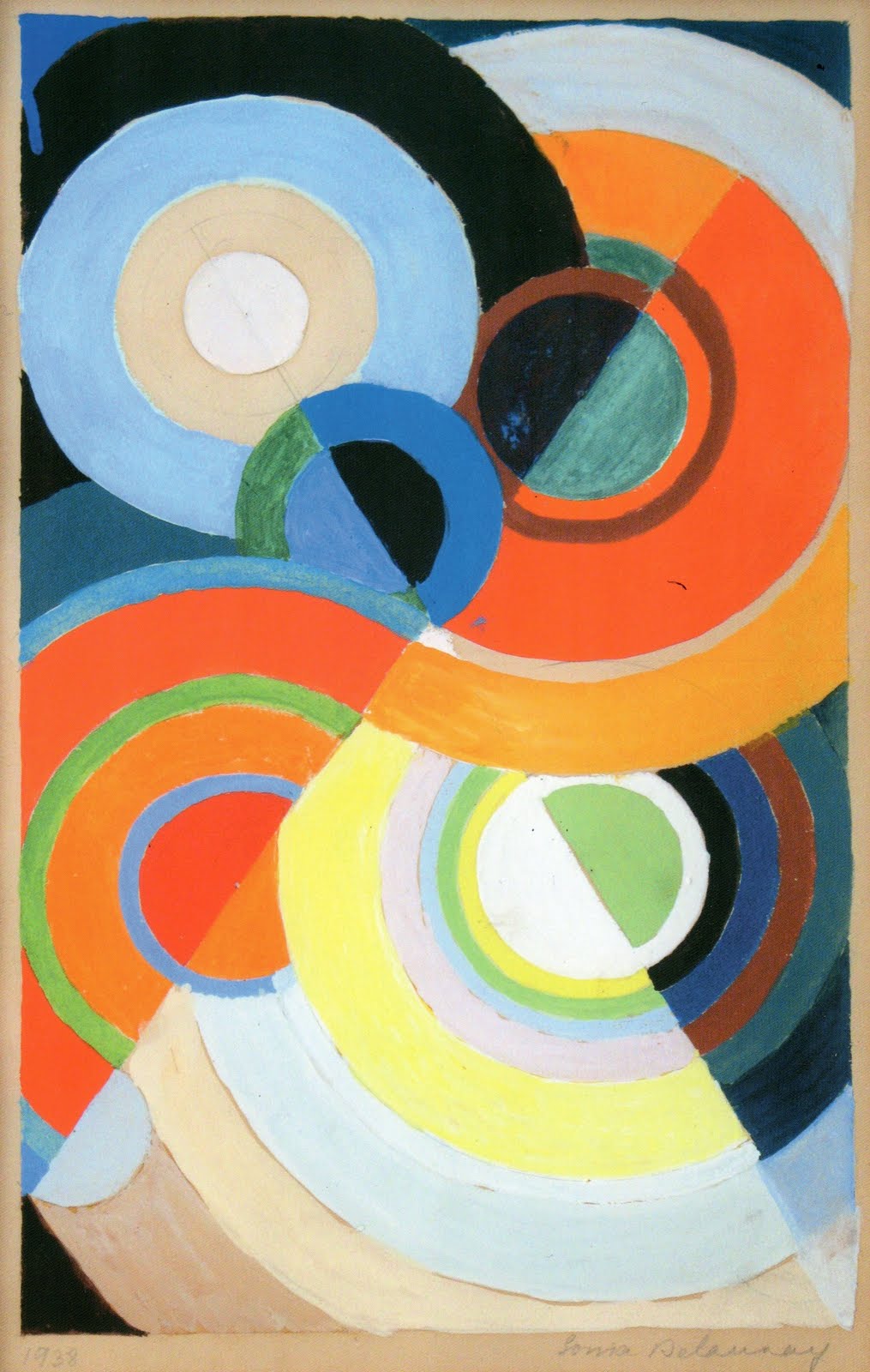
Above: Sonia Delaunay "Rhythme Colore", 1946. This is on view at the Cooper Hewitt in the show "Color Moves: Art and Fashion by Sonia Delaunay" till June 19th 2011.


Above: Drawings by Sonia Delaunay for bathing suit designs


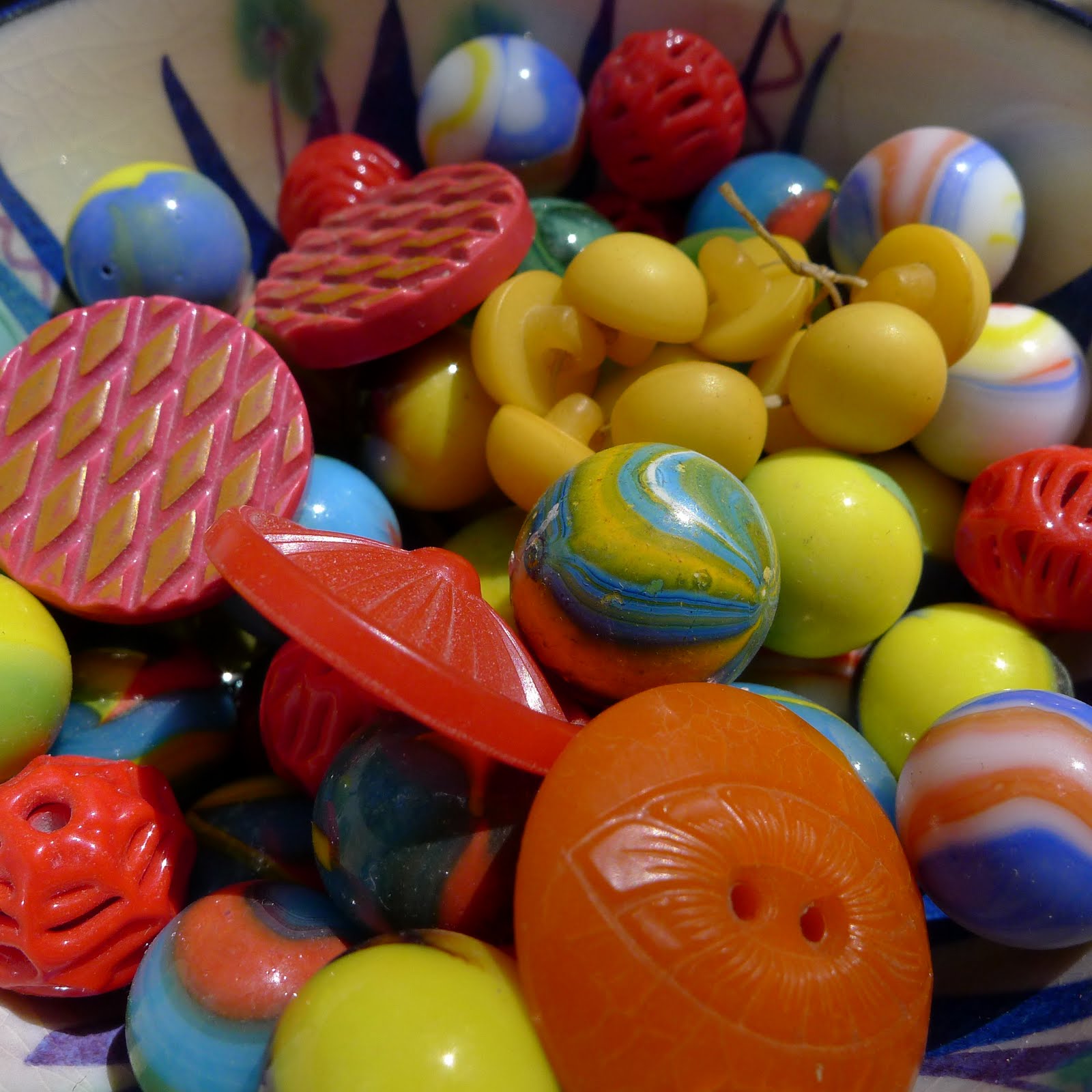
Above: Marbles, beads, and buttons I've collected


Above: Stereo band graphic


Above: Japanese caligraphy which includes colored circles.


Above: Painting by Beatriz Milhazes


Above: Window installation by Beatriz Milhazes, as part of her survey exhibition at the Estacao Pinacoteca, Sao Paolo, Brazil, in 2008.


Above: photo by Mike Slack


Above: Photo by Uta Barth


Above: Donald Sultan "Smoke Rings February 14th 2001"


Above: Adam Fuss "Ark" 2005 silver gelatin print photogram. Fuss makes his photograms by using only light sensitive paper and a light source casting shadows or reflections on the support surface. This can be done in sunlight, or with artificial light. In this photogram the paper is submersed in water and picks up ripples in the water directly, not through a negative.


Above: Ring around the moon


Above: Ruth Asawa in front of her work, 1954


Above: Things we found on the beach...marbles, balls, and round rubber pieces.


Above: Joseph Cornell, "Sun Box", 1956


Above: Jean Tinguely and Yves Klein


Above: By Jean Tinguely, 1954


Above: By Jean Tinguely, this machine draws.


Above: By Jean Tinguely, this machine, "Homage to New York", 1960, was designed to self destruct.


Above: Spinning wheels turned wool into yarn, and round bobbins and spools hold thread for sewing machines. These vintage bobbins are from the blog "A Collection a Day"...this is day 24.


Above: Vintage buttons


Above: Julia Child's famous peg board where she hung her pots and pans. Their places are all marked.


Above: Maira Kalman included her late husband Tibor's collection of onion rings in her retrospective.


Above: Gordon Matta-Clark, from his Whitney retrospective "You Are The Measure", 2007.


Above: Two passengers on the German ocean liner MS St. Louis. "The Voyage of the Damned" was based on their terribly sad true story... a ship full of German Jewish refugees trying to find a country that would accept them in 1939.


Above: A round opening at Arcosanti, the utopian town in Arizona designed by Italian architect Paolo Soleri. I spent a summer there working on the project. Soleri believed in creating mixed use multi story structures to live and work in, leaving lots of open land all around, instead of single family houses taking a much greater amount of acreage per person.


Above:  The area at Arcosanti where the Soleri bells are made.


Above: The opening at the top of the Pantheon


Above: Japanese Roof tiles


Above: The Maritime Hotel, NY, which was originally designed for the Maritime Union in the late 1960s with a porthole window theme.


Above: A room at the Maritime Hotel.


Above: Strange effect... I think this is a mirror hung on a cement wall.


Above: Jean Prouve in front of steel doors with porthole type windows. He used these doors n his own house, as well as in the Maison Tropicales shown below.


Above: Detail of Prouve's home


Above: One of three prefab homes Jean Prouve designed for use in Niger. The design was called "Maison Tropicale", and it was meant to withstand scorching heat, tropical rain, tornadoes and even gunfire, but when the prefabricated homes were offered to the French bureaucrats living in the West African colony of Niger in the late 1940s only three were purchased. The idea of living under a metal roof in extreme heat may not have seemed desirable, and they were expensive to build, but they are beautiful. In 2007 Christie's auctioned one of the three, and it was purchased for about five million dollars in 2007.


Above: Here it is on view in NY, in Long Island City, next to the Queensboro Bridge.


Above: A view of the interior of the "Maison Tropicale"


Above: The walkway around the house

Above: There is something so appealing about the pattern of circles created by the dryer fronts in laundromats, not to mention the memory of warmth and comforting clean smells. Photo by Amber Miller


Above: Round Streamline Moderne diner


Above: Kenneth Noland, Circle, 1998


Above: Damien Hirst, "Valium" 2000


Above: Robert Irwin untitled disc painting, 1968, collection MOMA. There are four lights shining on the disc creating the shadows around it.


Above: Kenneth Noland "Brass Sound" 1962


Above: A promotional sticker for my brother, Josh Clayton-Felt's  album, "Inarticulate Nature Boy" on A&M. It was designed by Laramie Garcia.


Above: The round opening in my brother's guitar


Above: This is where the name of this blog came from...a favorite record by the Incredible String Band...see track 3. From cylinders to albums to CDs all music seems to be recorded on circles. Even tapes wind around on circular spindles.


Above: "Jyoti", or "Light" Tempera painting in gold. Deccani school, 18th century. From Tantra Art, by Ajit Mookerjee


Above: Michiel Jansz van Miereveldt, "Portrait of a Woman"(1628) wearing a ruff.


Above: Sol LeWitt "Wall Drawing 462" at Mass MoCA. this exhibit will be up for 25 years. "Wall Drawing Retrospective" includes 105 of LeWitt's large scale wall drawings from 1969-2007. Mass MoCA is housed in a set of old factory buildings, and seeing this span of work all together, in this space, is really worth a visit.


Above: Redwood tree rings


Above: Stacked wood bowls


Above: Artwork at Kettles Yard, Cambridge, England. I think the artist is Ben Nicholson.


Above Martin Puryear, untitled, 1981-2, painted Poderosa Pine, 58" diameter

Above: Painting detail by Pieter Bruegel the elder, 1560

Above: Boys rolling bicycle rim hoops in Toronto, 1922


Above: Neon by The Cyrcle, known for the songs "Turn Down Day" and "Red Rubber Ball".


Above: Sandro Botticelli, Tondo of Madonna and Child 1481-1483


Above: Ulrich Ruckriem marking circles


Above: Richard Long, "Nomad Circle",  Mongolia 1996


Above: Richard Long, "Touareg Circle", The Sahara, 1988


Above: Richard Long, "Norfolk Flint Circle"


Above: Seahenge,  a prehistoric monument discovered in 1998, is probably 4,000 years old. It was excavated, and moved to an environment where it could be protected, to the dismay of many. In the center is a large inverted oak stump, surrounded by 55 split oak trunks with the bark facing out.


Above: Stonehenge